"How far can digital night vision see?" is the single most common question we get in customer support, and honestly we used to give the box answer and move on. Then we started hearing it back from buyers: "I bought it because the listing said 300 meters, and I can't read my own mailbox at that distance." Fair hit. The number on the spec sheet is usually the IR illuminator's reach, not what a human eye can actually make out. So in early October we did what we should've done a year ago: we took our own digital night vision units out into the field, measured real usable range at 50, 100, 200 and 300 yards, and wrote down exactly what we could and couldn't see. This post is that data, with the asterisks included.
What "range" actually means for digital night vision
Before the numbers, one distinction that fixes most of the confusion. Digital night vision has three separate "ranges":
- IR illuminator reach – how far the onboard IR light can throw usable illumination. This is the 300m / 400m number you see in listings. It's real, but it's only half the story.
- Detection range – where you can tell "there's something" (a shape, a deer, a person).
- Recognition range – where you can tell what it actually is, like a raccoon vs a cat, or a coyote vs a dog. This is the one that matters for wildlife watching and home security, and it's always shorter than the IR number.
A lot of the "why does my night vision look terrible" emails we get are people comparing recognition distance to the illuminator spec. Nobody tells you the difference up front. So we're telling you now.
How we tested
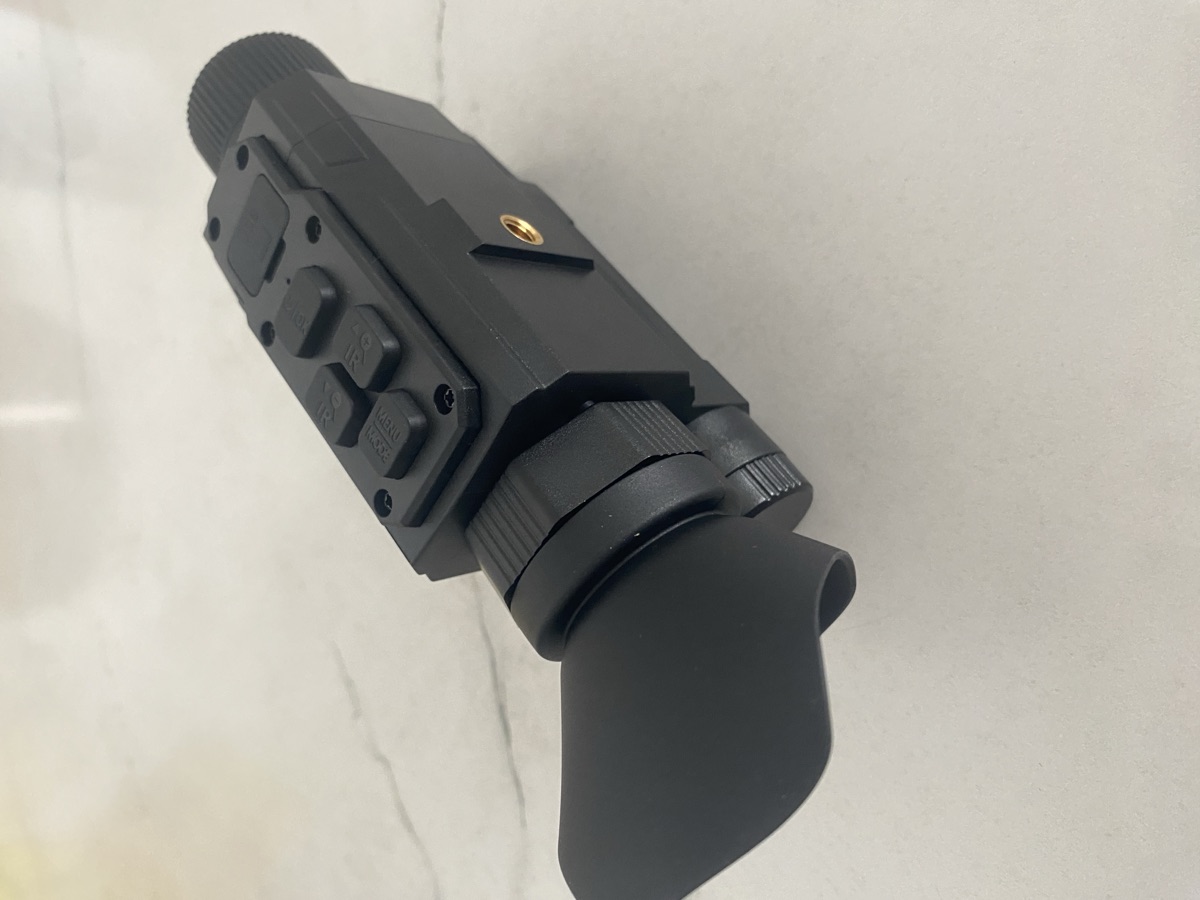
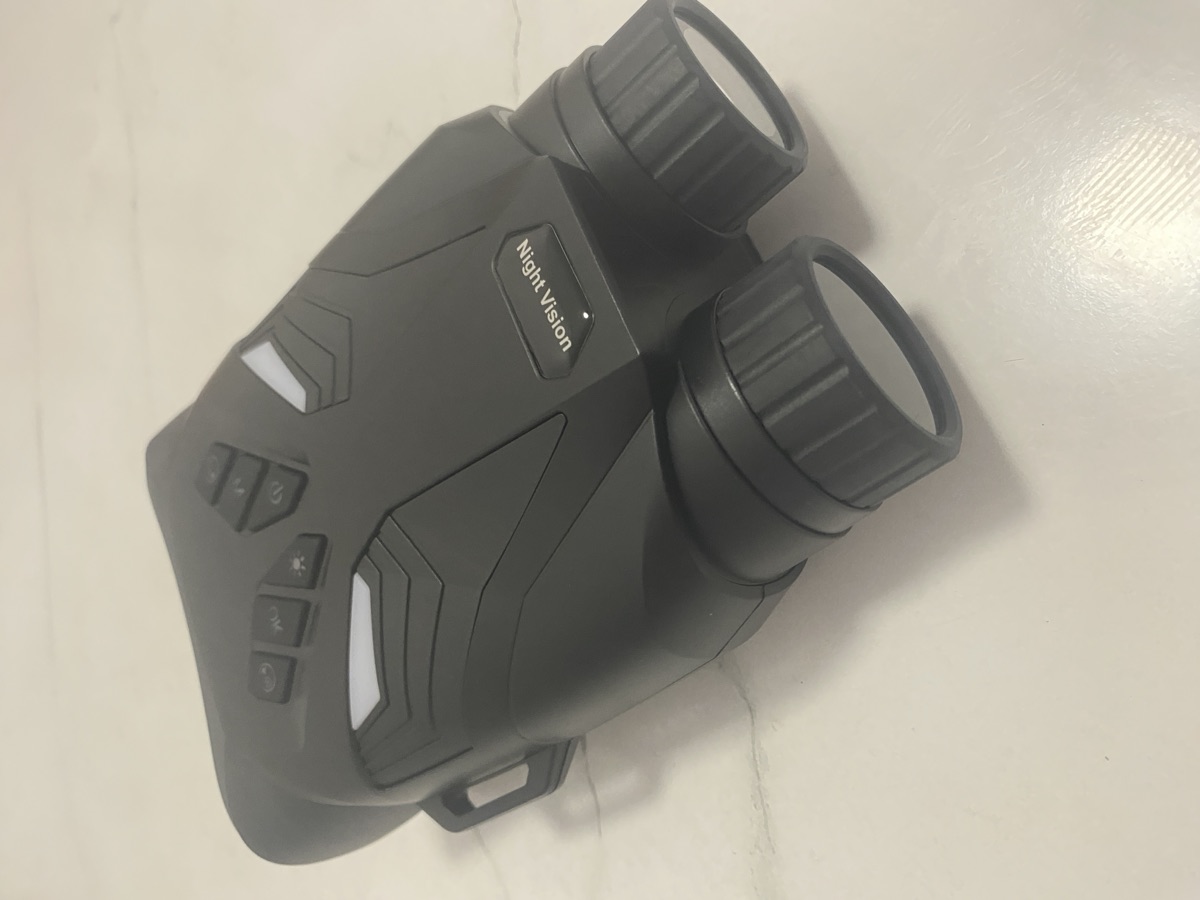
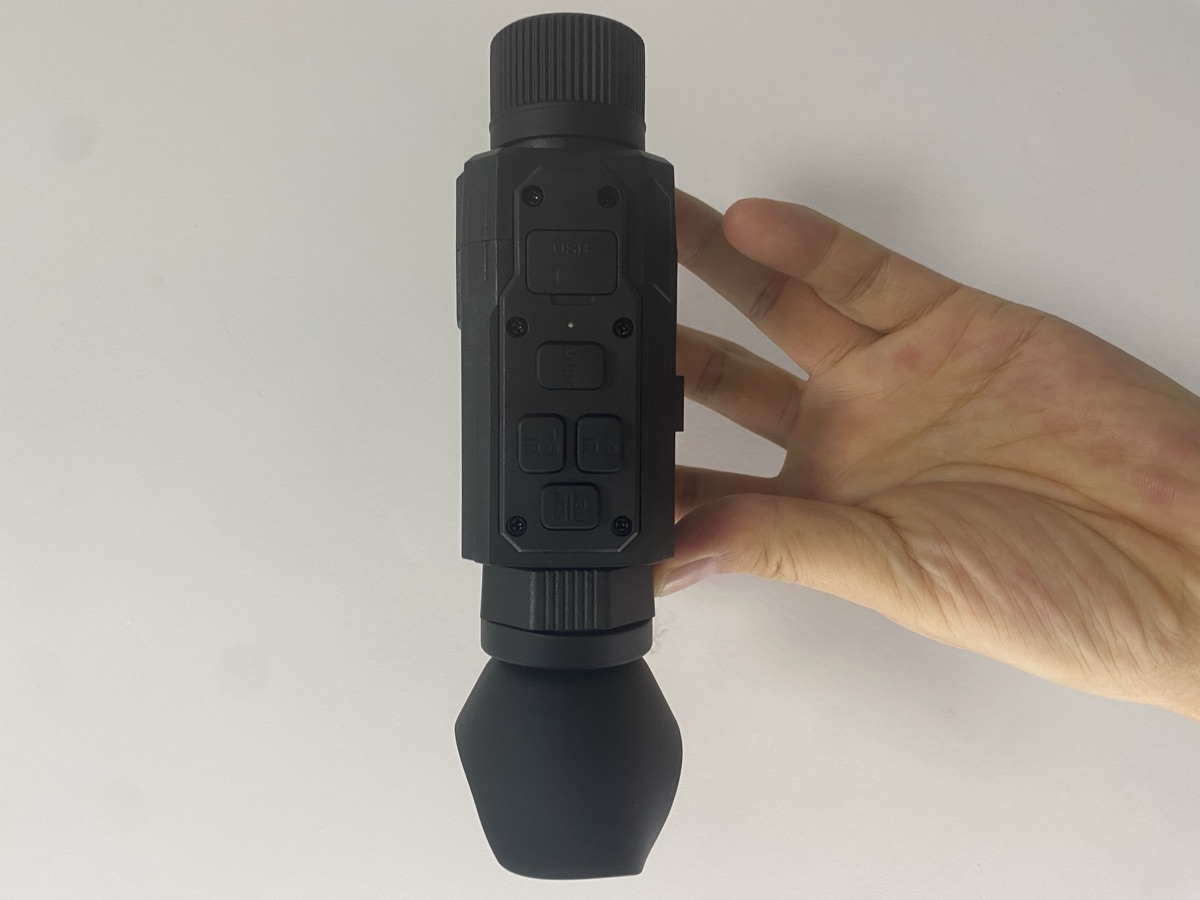
We took three units from our own lineup – the NV-DT79 handheld binoculars, the NV-LG66 monocular, and one of our 4K handheld binoculars – out to a rural field with mixed grass, tree line, and a chain-link fence at measured distances. We used a cheap rangefinder and a surveyor's tape to mark 50, 100, 200 and 300 yards. Conditions: clear sky, half moon, some cloud cover later. We tested each unit twice, once with IR on and once with IR off, using the built-in eyepiece screen.
For the "IR off" test we used whatever moonlight and starlight was available. For the "IR on" test we used the onboard illuminator only – no external IR torch. Each observer looked, called out what they thought they saw, then we walked up and confirmed.
The numbers
Short version: useful recognition with onboard IR tops out around 100 yards on the units we sell. Detection stretches further, but the quality falls off fast past 150 yards. Here's the breakdown.
At 50 yards
This is the sweet spot for digital night vision in this price class. With IR on, all three units gave a clean image where we could read body language – a deer turning its head, ears flicking, the difference between a fox and a neighbor's dog. With IR off under half-moon, we could still recognize a deer standing at the tree line, just with noticeably more grain. If your use case is backyard wildlife, trail cam checking, or keeping an eye on the yard, 50 yards is where these units genuinely shine.
At 100 yards
Still workable, but the grain starts to matter. With IR on, we could recognize a deer and tell its head from its body – enough for observation, not enough to read facial features or a tag. With IR off, we dropped to detection plus vague body shape: we knew it was an animal, we couldn't reliably say which species until it moved. The 4K unit held up best here; the difference between 1080p and 4K sensors shows up exactly in this band, at 100-150 yards, not at 10 yards where everything looks good.
At 200 yards
This is where expectations need a hard reset. With IR on we could still detect motion and see the general mass of a tree line or a field edge, but recognizing a specific animal got unreliable. A deer at 200 yards through the eyepiece screen looked like a dark shape that occasionally moved. With IR off, honestly, we could barely tell the tree line from open grass without panning the unit back and forth. The onboard IR just doesn't light that distance well enough.
At 300 yards
If you're hoping to identify anything at 300 yards with a budget digital unit's onboard IR, stop reading – that's not what these are for. At 300 yards we could see the fence line and the glow of a distant security light, and that's about it. Detection of a large animal was inconsistent, recognition was impossible. The listing's "300m" refers to the IR torch being visible at that range, not you being able to see a deer there.
IR on vs IR off – the honest trade-off
Here's something we don't advertise loudly but you should know: at short range, IR on looks dramatically better, but it narrows your effective view and eats battery. Our DT79 with IR on in a dark yard gives a genuinely good image at 30-60 yards. The same unit with IR off relies on ambient light, and on a truly overcast, moonless night it becomes borderline unusable beyond 30 yards.
The practical takeaway for most buyers: if your property or your camping spot has any ambient light – a streetlight 200 yards away, moonlight, porch light glow – you're better off running IR off and saving battery, because the image stays more natural and the unit runs longer. If you're in total darkness, that's when you switch IR on and accept that your effective range drops to roughly the 50-100 yard band.
One customer pattern we see a lot: people buy a digital unit, go out on a pitch-black night, flip IR on, and are disappointed at 150+ yards. That's not a defective unit. That's onboard IR physics. If you genuinely need 200+ yard recognition in total darkness, you're in analog tube territory or you need an external IR illuminator – both of which cost meaningfully more.
What actually matters for your use case
We run support long enough that we can tell you exactly where digital night vision earns its keep:
- Backyard wildlife watching – this is the best use case for the money. 30-80 yards, IR on when it's dark, and you're watching deer, raccoons, foxes and owls in real time. The LG66 monocular in particular is light enough to hold steady for 20-30 minutes without a tripod, which matters more than resolution once you're actually trying to follow a moving animal. If you want both eyes free for scanning, a pair of digital night vision binoculars is the version to grab.
- Camping and outdoor observation – useful for scanning the camp perimeter, seeing what's making noise at the edge of the site, and spotting animals at moderate distance. Keep expectations at "confirm what's there," not "count the stripes."
- Home security / property checks – for checking a backyard, driveway, shed area or gate at typical residential distances, digital NV with IR on is genuinely handy and way cheaper than a full camera system install for casual use.
Where it does not earn its keep: long-distance species identification, anything where you need to read text or tags, or serious stargazing (you want a dedicated telescope for that, not a handheld NV unit).
Frequently asked questions
How far can digital night vision see with the IR on? In our field tests, usable recognition range with the onboard IR is roughly 50-100 yards on budget digital units. You can detect movement further out, out to maybe 150-200 yards, but don't count on identifying what you're looking at beyond 100.
Why does my night vision say 300m on the box but can't see that far? The 300m figure is the IR illuminator's rated throw, not the recognition range. The sensor, lens, and eyepiece screen all combine to determine what you can actually make out, and that's always much shorter than the IR spec. Every brand in this price class works the same way.
Is digital night vision better than analog (tube) night vision? For close-range casual use, digital wins on price, color (with IR off), and being able to record. Analog tubes win at long range and in total darkness with no active IR signature. For backyard wildlife watching and property checks, digital is the sensible budget choice.
What can I actually see with a night vision binocular at 100 yards? With IR on, you can recognize a deer or raccoon and follow its movement; you won't read markings or facial details. With IR off and moonlight, you get detection and rough body shape. That's consistent across the units we tested.
Do I need a tripod for night vision binoculars? At 50 yards, handheld is fine for most people. Past 100 yards, hand shake gets amplified and a tripod or a solid rest helps a lot. For long observation sessions, mount it – your arms will thank you after 20 minutes.