If you've ever stood in a backyard at 11 p.m. watching raccoons, had the IR illuminator on, and felt the night vision binoculars battery die on you mid-watch, you already know battery life is one of those specs that never matches real life. Marketing pages say "8 hours!" and you get 3.5. So we sat down and did the boring math: how long do night vision binoculars batteries actually last, what eats the power, and why does cold weather make it worse?
We've been selling digital night vision gear for years, and battery questions come up in customer emails more than any other topic. So this isn't a spec-sheet regurgitation — it's what we actually see on the bench and what customers tell us after a week of use.
The short answer
On a full charge, most rechargeable digital night vision binoculars in our 2026 lineup run 4–6 hours with the IR illuminator on medium and 8–10 hours with IR off (just low-light amplification). Drop to freezing temperatures and you can lose 20–35% of that. Run the IR on level 7 or higher and you're looking at 2.5–4 hours, not 8.
That range is real. It's also the range that trips people up, because "8 hours" on the box usually means: IR off, screen brightness at 30%, room temperature, and a freshly formatted battery. Nobody actually uses it that way.
What actually drains a digital night vision binocular
Three things pull power, and they're not equal.
1. The IR illuminator is the big one
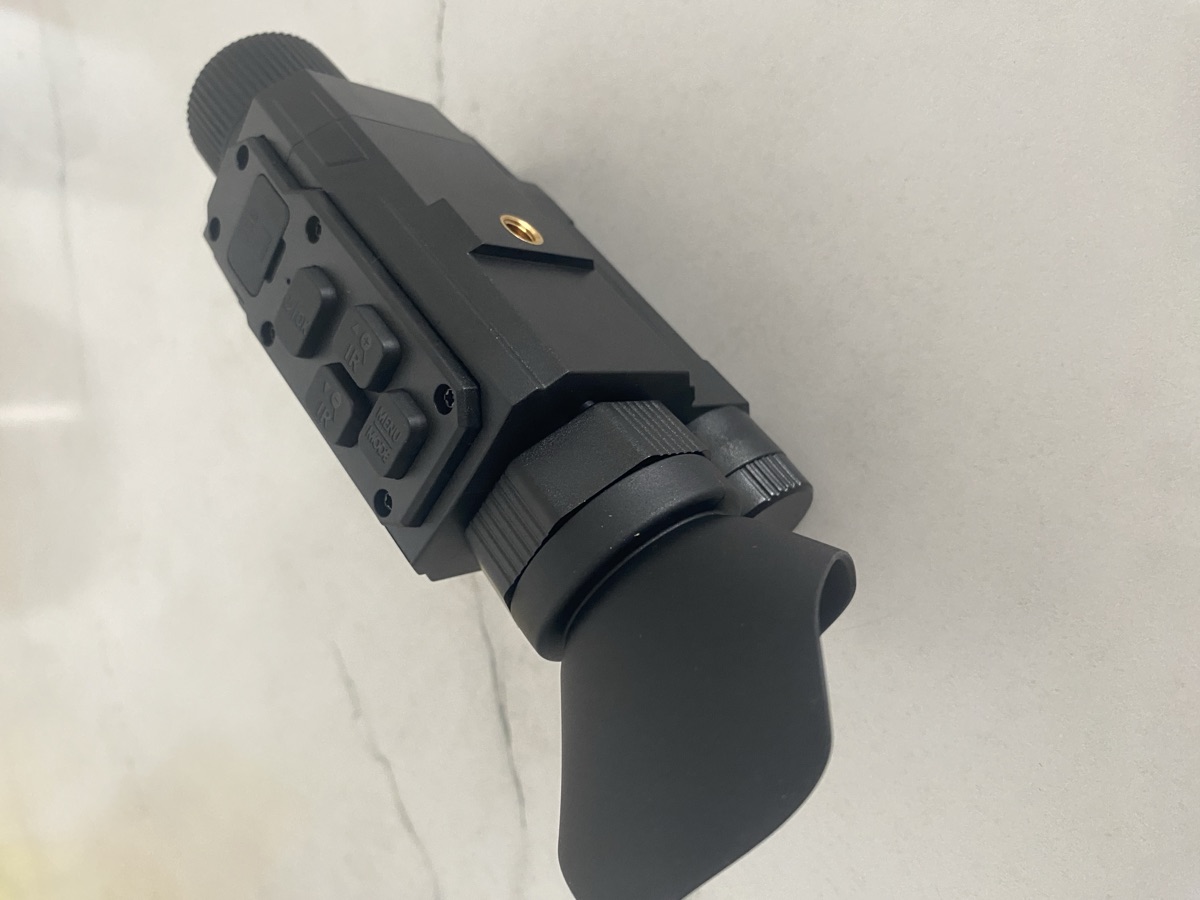
The infrared LED that lights up your scene in total darkness is the single largest power consumer in any digital NV device. On most of our binoculars, the IR has 9 levels. Levels 1–3 barely draw. Level 5 is medium range (about 50–80 yards on a clear night). Levels 7–9 are the long-range flood that reaches 200+ yards — and they can cut battery life by half compared to running IR at level 2.
We tell customers this on the product page, but it's worth repeating: if you're watching backyard animals at 20–30 yards, you don't need IR level 9. Level 3 or 4 is enough, and you'll nearly double your runtime.
2. The display screen
The built-in screen on digital NV binoculars eats more than people expect. It's an LCD or OLED panel running at full brightness, often with a backlight that's always on. Crank the screen brightness to max because you're fumbling with gloves, and you'll notice the battery meter dropping faster.
A trick we use: lower the screen brightness to 50–60% indoors before you head out. Once your eyes are dark-adapted, the screen looks plenty bright and the battery thanks you.
3. Recording and WiFi streaming
If you're filming wildlife footage or streaming to a phone over WiFi, you're adding a whole second power drain. Video recording to the microSD card uses the image sensor, the processor, and the storage chip all at once. WiFi streaming adds radio transmission on top.
Real-world math: IR on medium + screen at 60% + no recording = ~5 hours on a 4000–5000mAh pack. Add continuous video recording and you're down to roughly 3 hours. Add WiFi live view on top of that and expect 2–2.5 hours.
Why cold weather kills the battery faster
This is the one nobody warns you about.
A lithium-ion battery rated for 8 hours at 25°C (77°F) can easily drop to 5–6 hours at 0°C (32°F), and below freezing you're looking at 4 hours. The chemistry slows down, the internal resistance rises, and the NV binocular keeps drawing the same current — so the available capacity just evaporates.
We see this in customer emails every November. Someone buys a pair for a late-November camping trip, uses it on a 28°F evening, and writes in saying "your battery claim is wrong." It's not wrong, it's just tested at room temperature. Cold is cold.
What to do about it:
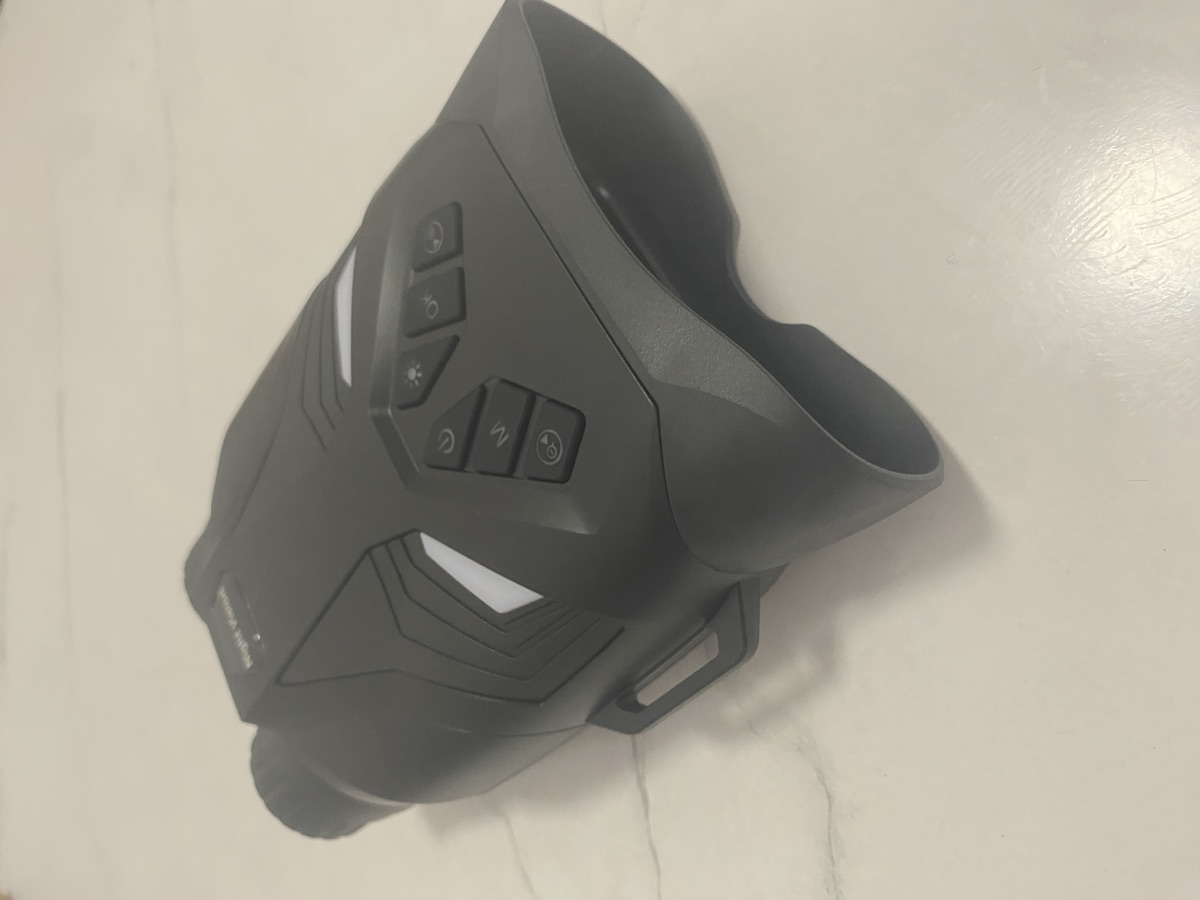
- Keep a spare internal battery or charged power bank in an inner jacket pocket, not in your pack. Body heat keeps it ready.
- If your device runs on external USB-C, a 10,000mAh power bank doubles your runtime on cold nights.
- Turn the IR down a notch when it's freezing — your eyes adapt faster in the cold dark, and the screen doesn't need as much fill light.
Rechargeable internal vs. AA batteries: which lasts longer?
We sell both, and customers ask us which is better. Honest answer: it depends on how you use it.
Built-in rechargeable (4000–5000mAh). These are the binoculars with a sealed USB-C port and a non-removable cell. Our 5000mAh rechargeable NV binocular gets roughly 5 hours with IR on medium, which is plenty for a single evening. The upside is a sealed body and no battery tray. The downside is when it dies, it's dead until you can plug it in.
External AA / 18650. Devices that take user-replaceable cells win on long trips. You can carry four spare AAs in a pocket and swap in 10 seconds. The trade-off is a slightly bulkier body and a battery door that isn't fully sealed.
If you're out for a single evening in the backyard, internal rechargeable is simpler. If you're camping for 3 nights without power, user-replaceable cells are the safer call.
Our own numbers, from the bench
We tested a few of our own units last month so we could give customers straight answers. These are real numbers, not marketing:
- Handheld 4K NV binocular, 4000mAh: 5h 10m with IR level 4, screen at 50%, no recording. Dropped to 3h 40m when we turned IR to level 8.
- Handheld NV monocular, smaller cell: 6h with IR off, 4h 15m with IR on medium. The monocular draws less because there's only one eyepiece screen.
- Helmet-mounted goggle, 4500mAh: 4h 30m with IR on and the screen running. Helmet units run a slightly brighter display because you're wearing them close to your eyes.
None of these hit the "10 hours" you'll see on the box. The box number is tested under ideal lab conditions. Your night in the woods isn't a lab.
How to make your NV binocular battery last longer tonight
- Lower the IR. Most backyard observation doesn't need level 9. Level 3–4 covers 30–50 yards.
- Lower the screen brightness once your eyes adjust.
- Turn off WiFi unless you're actively streaming.
- Stop continuous recording when you're just watching, not filming.
- Keep a spare battery warm in an inner pocket during cold weather.
- Charge to 100% the night before, not on the drive over.
FAQ
How long do night vision binoculars last on a full charge?
Most rechargeable digital NV binoculars run 4–6 hours with the IR illuminator on medium, and 8–10 hours with IR off. Cold weather cuts that by 20–35%.
Can I use a power bank with night vision binoculars?
Yes, if the device has a USB-C or external power input. A 10,000mAh power bank can roughly double your runtime, especially on cold nights.
Why does my NV binocular battery die faster in winter?
Lithium-ion batteries lose capacity as temperature drops. At freezing, you can expect 60–75% of the rated runtime compared to room-temperature testing. Keep spares warm against your body.
Does using IR at full power drain the battery faster?
Significantly. Running IR at level 7–9 can halve your battery life compared to level 1–3. For close-range backyard watching, level 3–4 is usually enough.
How do I extend the battery life of my night vision binocular?
Lower the IR to the minimum you can see by, reduce screen brightness, turn off WiFi and recording when not needed, and keep spare batteries warm in cold weather.