Helmet-Mounted vs Handheld Night Vision: Which Is Right for You?
The short answer: choose helmet-mounted night vision when you need both hands free — hunting, hiking, patrolling, or any mobile activity. Choose handheld night vision binoculars or monoculars when you'll mostly observe from a fixed position — wildlife watching, camping, birding, or home security — because they're lighter, cheaper, easier to pass around, and give you a steadier two-handed view. Many outdoor users end up owning one of each.
It's the classic first question when buying night vision: do I wear it or hold it? The answer changes the whole experience — weight on your head for hours, whether your hands are free, battery life, and even how stable the image is. Here's a practical comparison to help you decide, with real BekinTek models for each style.
1. The core tradeoff: hands-free vs stable view
Helmet-mounted (also called head-mounted or helmet-mounted goggles) straps to your head or helmet and rides with you. Your hands stay free for a bow, rifle, walking pole, flashlight, or phone. The tradeoff is weight on your head and a view that moves with your head — fine for scanning, less ideal for long fixed observation.
Handheld binoculars and monoculars are held up to your eyes. You get a steady, two-handed image that's easy to brace against a tree or truck window. They're lighter in the pack and cost less than equivalent helmet-mounted units. The tradeoff: one hand is always busy holding them.
2. Side-by-side comparison
| Factor | Helmet-mounted | Handheld | |---|---|---| | Hands free | ✅ Yes | ❌ No | | Best for | Hunting, hiking, patrolling, night walks | Wildlife, birding, camping, security, observing | | Stability | Moves with head | Steady two-handed hold | | Weight | On your head (needs light unit) | In your hands / pack | | Typical price | Higher for same features | Lower | | Battery | Usually larger battery (worn all night) | Varies, often smaller | | Shareable | No | Easy to hand to a friend/kid |
3. When helmet-mounted wins
Go helmet-mounted when you are moving:
- Hunting — spot-and-stalk needs both hands for your gear
- Night hiking / trail — hands for trekking poles, balance, or a map
- Security patrolling — walk a perimeter and keep hands ready
- Hands-free recording — the camera captures what you look at
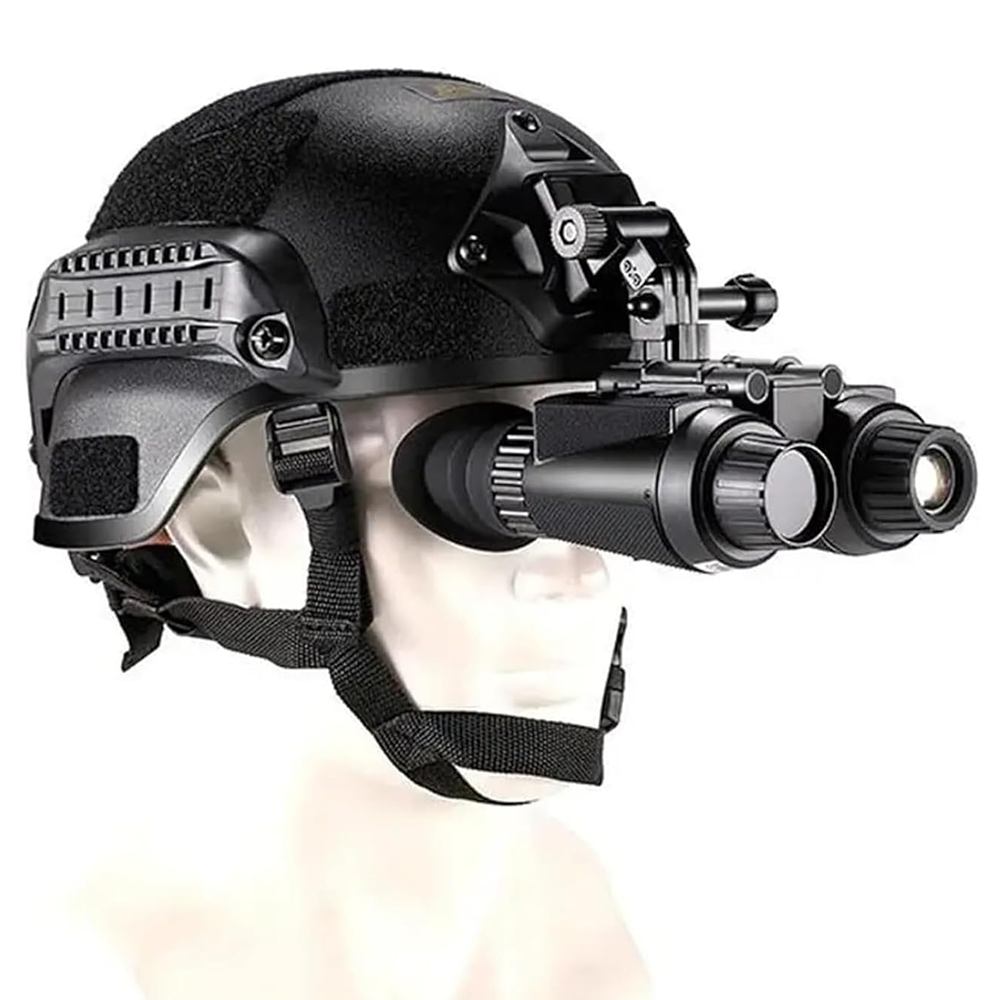 BekinTek Dual Eye 3D helmet mounted night vision
Look for a light unit with a secure strap and decent battery — BekinTek's helmet-mounted series ranges from a compact monocular ($120) to dual-eye 3D binoculars ($175–$199) with 4K recording.
4. When handheld wins
Choose handheld when you stay put or want versatility:
- Wildlife / bird watching — long, stable glassing sessions
- Camping — spot-check the site and pack it away
- Home security — scan the yard from a window or deck
- Kids and guests — easy to hand over and share
Handheld binoculars also give you a bigger screen and often better ergonomics for careful observation. BekinTek's handheld line starts at $95 and includes full-color and long-range models.
5. Can you have both?
Many serious outdoor users do. A common setup:
- Helmet-mounted 4K unit for active hunting and hiking — $130–$180
- Compact handheld monocular for the pack as backup and for others — $95
That combo covers every scenario and costs less than one premium analog unit. You also avoid the "wrong tool" feeling of trying to hold binoculars steady while walking.
6. Quick decision flow
Ask yourself three questions:
- Will my hands be busy? Yes → helmet-mounted. No → handheld.
- Will I walk while using it? Yes → helmet-mounted. Mostly stationary → handheld.
- Will others use it? Yes → handheld (or a helmet unit + a cheap handheld backup).
If the answer leans 2-1 toward helmet-mounted, start there; you can add a compact handheld later for shared use.
FAQ
Q: Is helmet-mounted night vision better than handheld? A: Not universally — it depends on use. Helmet-mounted is better when you need hands-free mobility (hunting, hiking, patrolling). Handheld is better for stable, fixed observation (wildlife, camping, security) and is usually lighter and cheaper. Many users own one of each.
Q: Can I wear night vision binoculars on my head? A: Night vision goggles designed for head/helmet mounting can be worn on a head strap. Handheld binoculars are not designed to be worn — they're too heavy and not balanced for head use. Match the form factor to the product: use the helmet-mounted series for wearing.
Q: Are helmet-mounted night vision goggles comfortable for long use? A: Modern helmet-mounted units are designed to be light and balanced. BekinTek helmet-mounted models are built for multi-hour wear with secure, adjustable straps. For all-day wear, choose a lighter monocular over a heavier dual-eye binocular.
Q: Which is better for home security: helmet-mounted or handheld? A: Handheld binoculars are usually the better choice for home security — you're observing from a fixed position (window, deck, perimeter), and a handheld unit is cheaper, easier to grab quickly, and simple to hand to a family member. Use helmet-mounted if you're actively patrolling a large property.
Q: What is the best helmet-mounted night vision for hunting? A: For spot-and-stalk hunting, look for a light helmet-mounted unit with 300m+ IR range and 4K recording. BekinTek's 4K Helmet Mounted Night Vision Binoculars ($180) and the Dual Eye 3D model ($175) are strong picks that keep your hands free.
BekinTek builds night vision technology for outdoor sports, hunting, wildlife, and security. Compare the full helmet-mounted series and handheld night vision binoculars to find your fit.