If you've ever shopped for a pair of night vision binoculars, you've seen the marketing claims: "see 500 meters in total darkness." Then you read a review saying, "it barely works past 150 meters." So how far can night vision binoculars see — and why is there such a huge gap between the box and reality?
The short answer: a good digital night vision binocular can reliably identify wildlife out to 100–200 meters, detect movement out to roughly 200–300 meters, and some high-power infrared (IR) units push useful recognition to around 500 meters — but only under ideal conditions. The number on the spec sheet is almost never what you get in your backyard.
In this guide we break down what actually determines real seeing distance, how IR strength and sensor quality change it, and what range you really need for wildlife watching, camping, or home security.
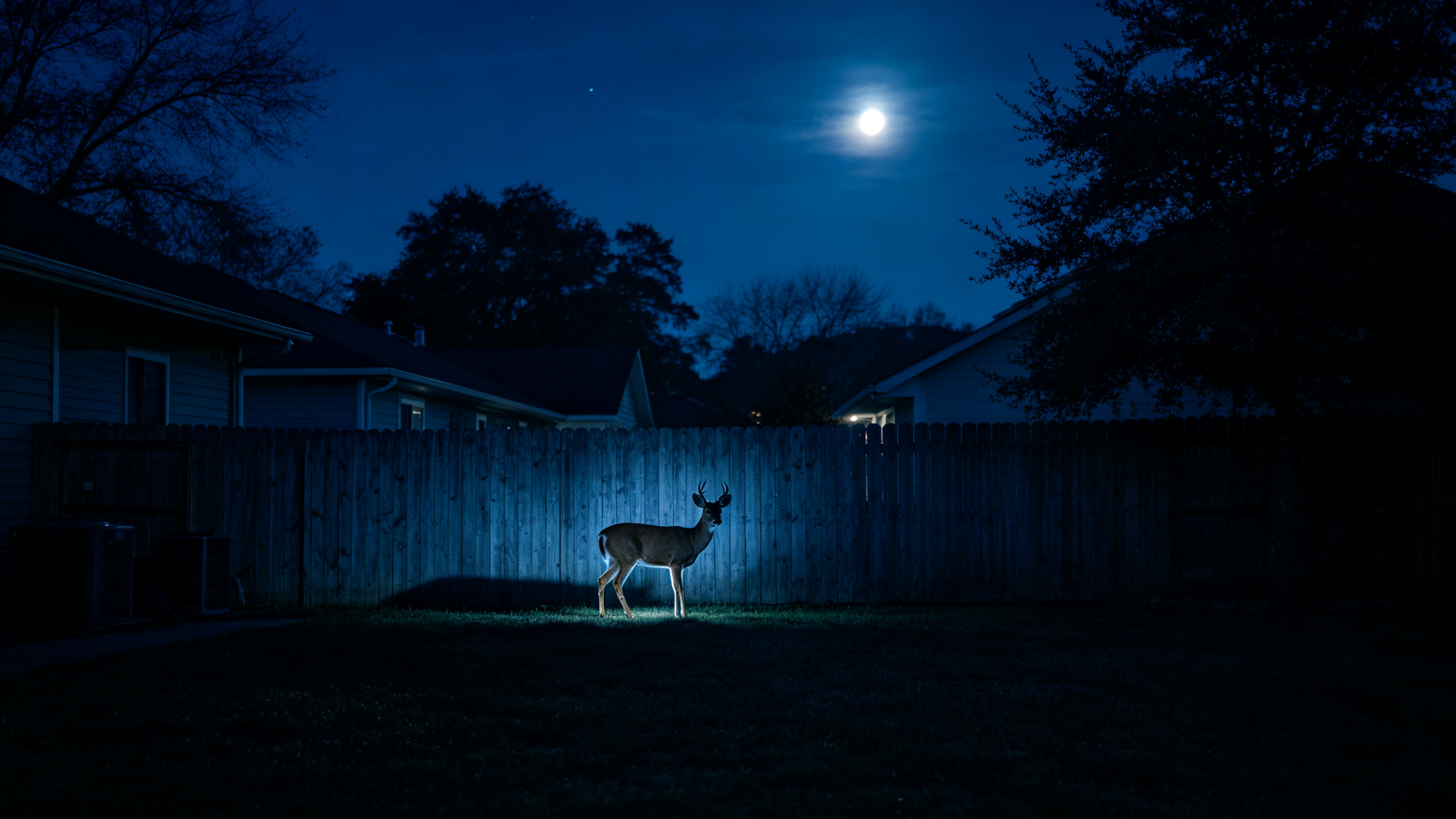 blog_hero_deer
What "seeing distance" actually means
Night vision range isn't one number — it's three, and confusing them is how listings mislead you.
- Detection: you can tell something is there (a dark shape).
- Recognition: you can tell what it is (a deer vs. a bush).
- Identification: you can tell details (antlers, eye shine, a specific animal).
Most "500m" specs refer to detection in perfect conditions. For real wildlife observation, you usually care about recognition, which happens at roughly one-third of the advertised maximum.
The four factors that decide your real range
1. Infrared (IR) illuminator power
The built-in IR LED is a flashlight invisible to the naked eye. Its strength, usually around 850nm, determines how far your "invisible flashlight" reaches. More IR levels = brighter image at distance.
2. Sensor quality
Budget units use small, noisy sensors that wash out fast as distance grows. Units with a larger "starlight" or color sensor hold color and detail much longer at the edge of the beam — which is why the same claimed range can look completely different between brands.
3. Ambient light
Starlight, moonlight, and even distant city glow dramatically extend range. In pitch black forest, you're fully dependent on your IR; on a clear moonlit night, your effective range can double.
4. Object reflectivity
A deer's eyes shine brightly and are easy to pick up at distance. A dark raccoon against dark brush? Much harder. This is why real-world range varies night to night.
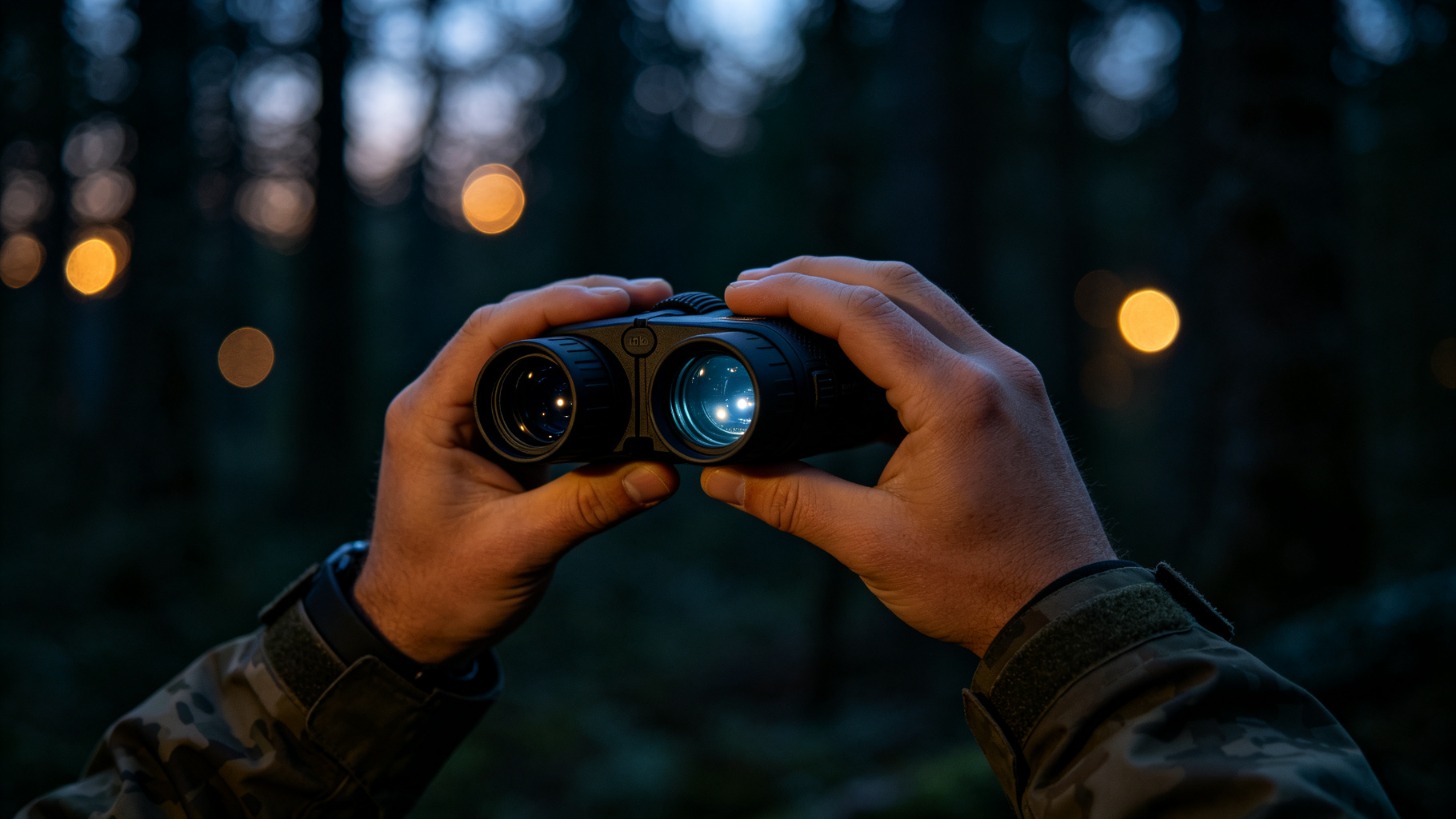 blog_holding_nv
Real tested ranges by device class
| Class | Detection | Recognition (useful) | Typical use | |---|---|---|---| | Budget digital monocular | 100–150m | 40–80m | Short campsite checks | | Mid-range binocular (5000mAh, multi-level IR) | 200–300m | 100–200m | Wildlife, backyard | | Premium long-range unit | ~500m | 200–300m | Field observation, security |
The key takeaway: buy for recognition range, not detection range. If you want to actually identify a nocturnal visitor in your yard, look for a mid-range binocular with adjustable multi-level IR and a larger sensor, like the BekinTek 500m WiFi night vision binoculars.
Which range do you actually need?
Wildlife & backyard observation
You usually watch animals at 30–150 meters. A mid-range digital binocular with 9-level IR and a color sensor is plenty, and the full-color (no-IR) mode makes daytime nature watching enjoyable too.
Camping & navigation after dark
You're scanning 10–50 meters, so even a compact unit works. Comfortable eyecups and a sharp screen matter more than raw range here.
Property & home security monitoring
If you're checking the edge of a driveway or field, you want recognition out to 150+ meters, and a long-lasting rechargeable battery so you aren't hunting for cells at midnight. The BekinTek 4K helmet-mountable goggles is built for extended hands-free observation.
How to test real range before you buy
Smart buyers look past the spec sheet. Ask these three questions:
- Does it show real footage at range, not just close-up hero shots?
- What's the battery life in continuous use, and is it rechargeable? (Budget units often dim after a few hours.)
- Is the image stable — no focus drift, no moisture after a dewy night?
A reputable brand shows actual night footage and clearly states battery runtime and IR levels, rather than only repeating a single eye-catching "500m" number. The BekinTek 4K starlight 300m binoculars show what a larger sensor can do.
Bottom line
So, how far can night vision binoculars see? Realistically, plan for recognition at 100–200 meters on a solid mid-range unit, with detection out to 300 meters. Anything marketed as a guaranteed 500 meters of clarity should be backed by real video proof. Match the range to how and where you actually watch — and choose a unit with adjustable IR and a rechargeable battery, not just the biggest number on the box.
FAQ
Q: Do night vision binoculars work in total darkness? A: Yes, when the built-in infrared illuminator is switched on. Without IR, they rely on ambient light (starlight/moonlight), which is why most units include a multi-level IR LED.
Q: Is "500 meters" night vision range real? A: It usually refers to detection in ideal, moonlit conditions. For actually identifying an animal, expect roughly one-third of that figure.
Q: What's the difference between color and black-and-white night vision? A: Infrared mode gives a black-and-white image; color (starlight) mode works in low but nonzero light and looks more natural. Many digital units switch between both.
Q: How long do rechargeable night vision binoculars last? A: A built-in rechargeable battery typically runs several hours continuously; smaller AA-powered units may dim after 4–5 hours, so spare power matters for all-night use.