Three customers emailed us last week asking the same question: "Should I buy night vision binoculars or a monocular?"
We get it. The spec sheets look nearly identical — same IR range, same display resolution, same price range. The difference shows up after you've been holding one for 20 minutes in the cold. So let's cut through the marketing and tell you what actually matters, based on the hundreds of units we've shipped and the support tickets that come back.
The short answer
Pick a night vision monocular if you hike alone, want the lightest setup, or need to film with one hand. Pick night vision binoculars if you're sitting in a blind for hours, watching wildlife with someone, or your hands shake at 5 a.m. That's it. Everything below is the detail.
What we actually notice after night after night
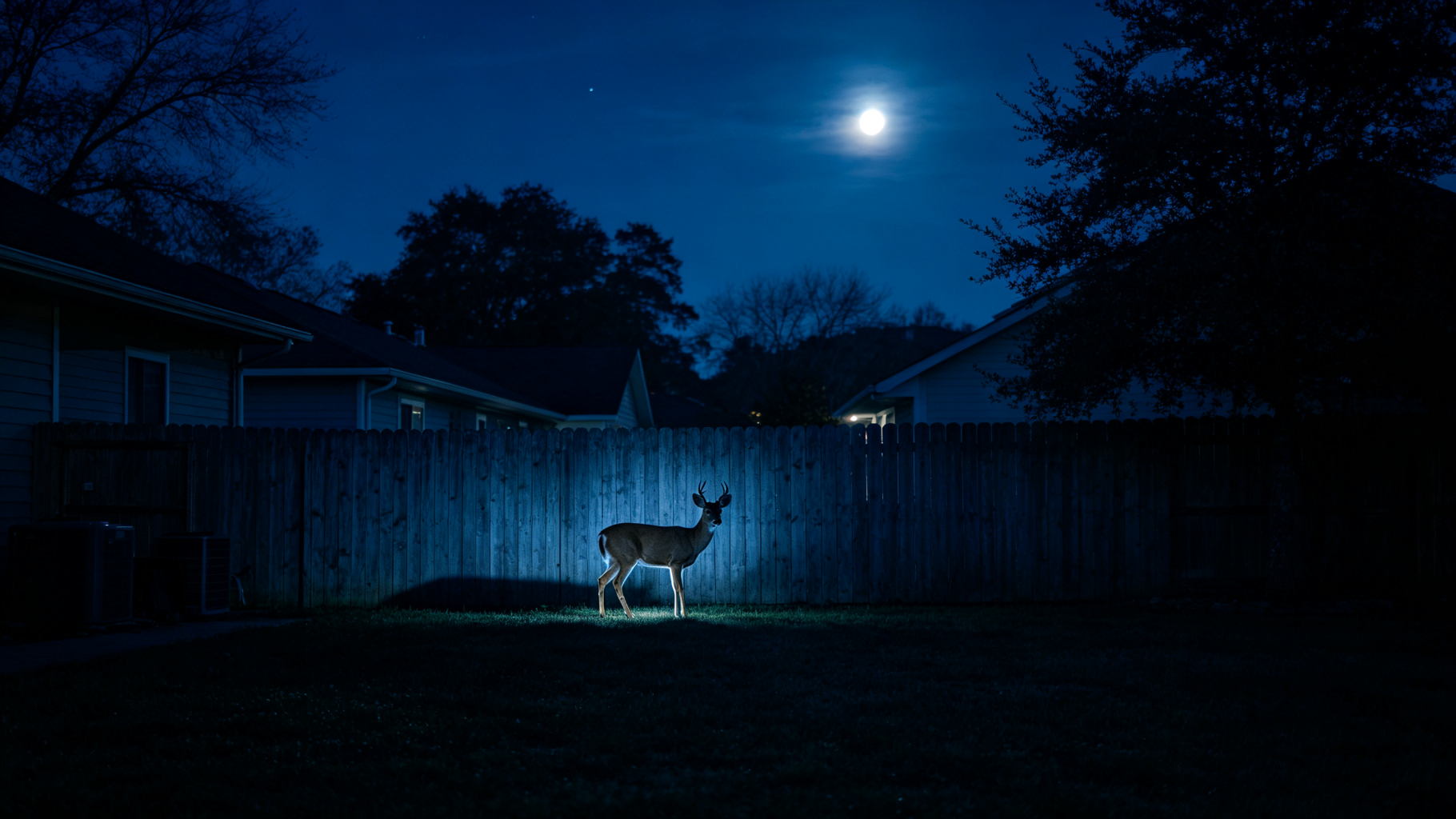 blog_hero_deer
Weight and fatigue
We took our 4K night vision binoculars and our WiFi night vision monocular out on a November evening in western Oregon. Temperatures dropped to about 38°F (3°C) and the woods were fully dark by 6:30 PM.
The binocular setup weighs roughly 1.3 lbs (590 g) with batteries in. Held up to your eyes continuously, that starts to feel heavy after 25–30 minutes. We ended up resting it on a fence post or our knees more often than not.
The monocular? About 0.6 lbs (270 g). You can hold it in one hand for an hour without your arm dying. That matters when you're tracking a raccoon from your backyard deck at 11 PM and don't want to wake the house shifting around.
What you see
Here's the part most review sites skip: two eyes on a digital night vision device doesn't always mean a 3D image.
Digital NV binoculars show the same IR camera feed to both eyes (or slightly split feeds), so you get comfort but not true stereoscopic depth like an optical binocular. The advantage isn't depth perception — it's that your eyes relax. You can glass for an hour without eye strain. With a monocular, one eye is always squinting or closed, and after 20 minutes that gets annoying.
A customer in Minnesota told us he returned his monocular after a week because his left eye got dry and irritated every night. He switched to our binocular NVGs and the problem went away. That's a real use case, not a spec-sheet argument.
Recording and sharing
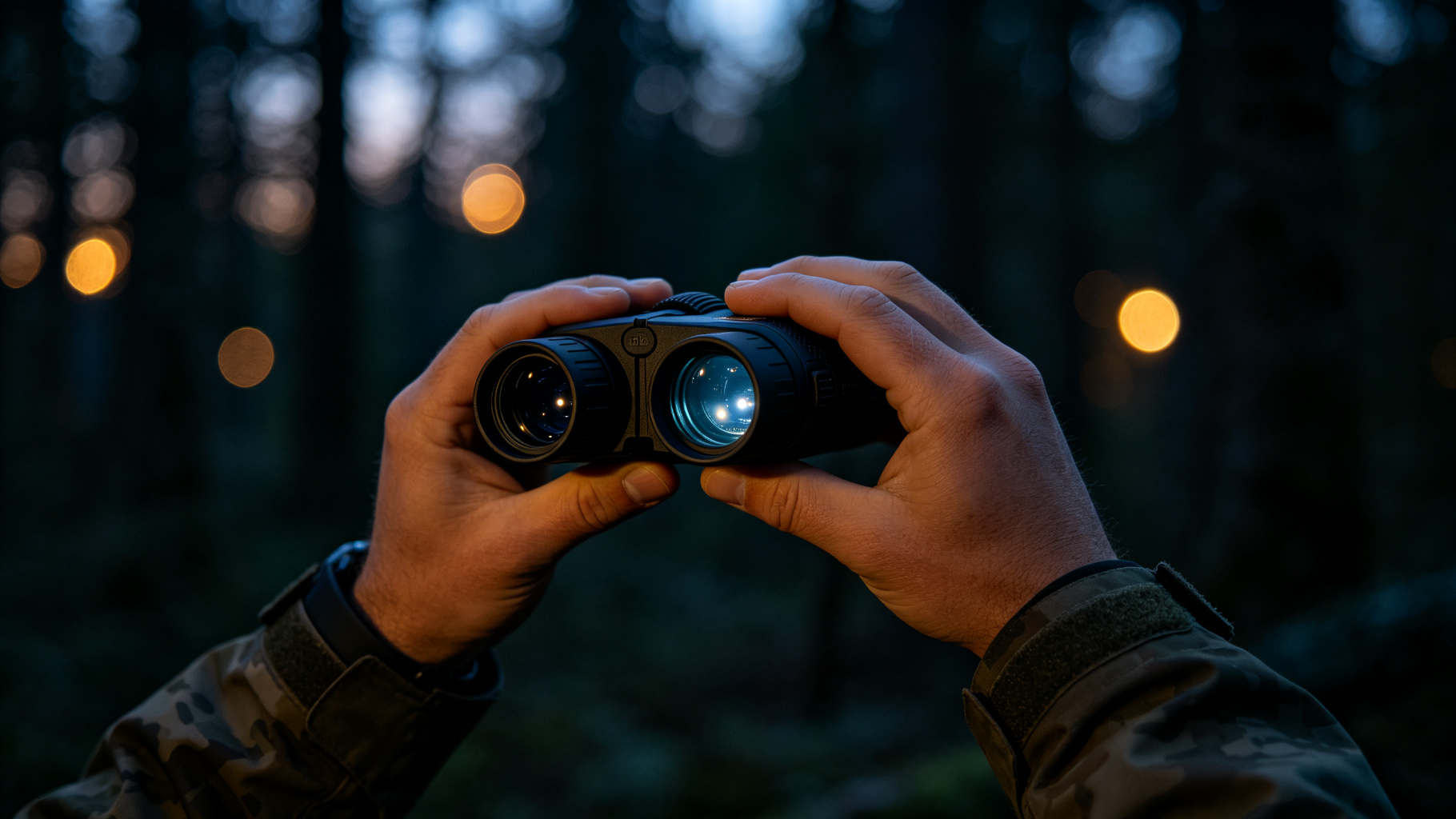 blog_holding_nv
Both types shoot photo and video to a microSD card. The difference is how you hold them while recording.
With a monocular, you hold it one-handed like a phone. That's actually better for stable footage because your other hand can brace against a tree or your knee. We've gotten surprisingly usable wildlife clips this way.
With binoculars, you need both hands up to your face. Trying to hit record while holding steady? Expect shaky footage unless you use a tripod mount.
Who should buy which?
Get a monocular if:
- You're solo hiking or camping and want the lightest pack weight
- You mainly use it for short 5–15 minute checks around camp
- You want to film or photograph wildlife without a second person helping
- You already wear glasses (a monocular fits over most frames easier)
- Budget is tighter — monoculars usually run $50–$100 less
Get binoculars if:
- You sit in a ground blind or on a deck for extended watching sessions
- You watch wildlife with a partner — both of you can look through
- Your hands get shaky (two eyes on target = more stable viewing)
- You want to record with a tripod-mounted setup
- Home security monitoring from a fixed spot
Common questions we get on support
Can you use one eye on binoculars?
Yes, but then why buy them? Some customers close one eye, which defeats the comfort advantage. If you're a one-eye person, save money and get the monocular.
Do binoculars see farther than monoculars?
No. Range is determined by the IR illuminator power and sensor, not by how many eyepieces there are. Our monocular and binocular models with the same IR rating perform almost identically at distance. Don't pay more for "longer range" on a binocular — check the actual IR LED specs.
Are binoculars harder to steady?
Counterintuitively, yes. Holding weight up to your face is tiring. But two eyes on the target makes what you see feel steadier because your brain is processing two signals. It's a tradeoff: more arm fatigue, more visual comfort.
Can kids use either?
We sell a kids' night vision binocular specifically because kids' faces fit binocular eye cups better than monocular eyepieces. If your kid is 8–12, binoculars are the easier sell.
Our honest take
We manufacture both, so we have no dog in this fight. But if you asked us which we personally reach for on a random Tuesday evening?
We grab the monocular. It lives in a jacket pocket. We take it out when we hear something outside, scan for 5 minutes, and put it back. The binoculars come out when we're deliberately sitting down to watch deer cross the field behind the shop.
Match the tool to how you actually behave after dark, not to the spec sheet.
FAQ
Q: Is night vision binocular better than monocular for home security? A: For fixed-point watching from a porch or deck, binoculars are more comfortable over long periods. For walking around the property checking cameras, a monocular is easier to carry.
Q: Can I wear glasses with night vision binoculars? A: Most digital NV binoculars have adjustable eyecups that fold down, so glasses wearers can use them. Monoculars are generally more forgiving with thick frames.
Q: Do binocular night vision devices have depth perception? A: Digital models show the same feed to both eyes, so depth perception is similar to looking at a screen. True stereoscopic 3D is rare in consumer digital NV.
Q: Which lasts longer on battery? A: Monoculars usually use one battery and draw less power. Binoculars may use two batteries but often include larger cells, so real-world runtime is comparable — around 4–6 hours on a charge.