Last November we set a platform feeder 28 feet from the back door, filled it with black oil sunflower, and started writing down what showed up after sunset. By 5:40 the cardinals were gone. By 6:10 the feeder was a dark rectangle and nothing else. That's the point where most people give up on evening birding, and it's exactly where night vision for backyard birding starts to make sense — not as a gadget, but as a way to keep watching the last half hour of bird traffic you'd otherwise miss.
We spent six weeks doing that: one chair, one thermos, one digital unit on a small tripod aimed at a seed tray. Here's what actually worked, what didn't, and the settings we ended up leaving alone.
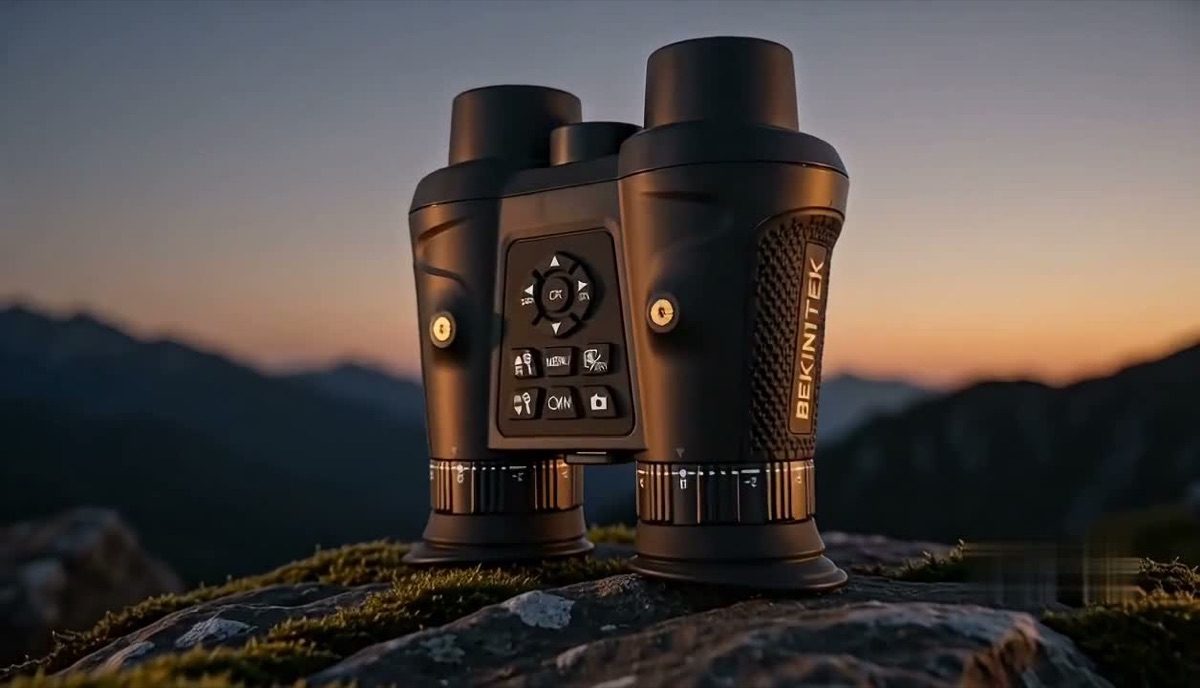
What a 7x digital unit actually resolves at feeder distance
Paper specs say 200 meters. That number is measured against a reflective surface, not a four-inch bird at 30 feet, so ignore it for this use. What matters is how much detail survives at the distances you'll actually sit at.
At 25 to 30 feet, in full IR, a 7x digital unit gives you a clean silhouette, body shape, tail length and beak profile. A cardinal's crest is obvious. A house finch reads as a finch because of the way it sits and cracks seed, not because you can see feather detail. Mourning doves are easy. Chickadees are small enough that you'll mostly be identifying them by behavior and size.
At 40 feet things get softer. You still get outline, wing movement and approach path, but the bird is a shape, not a portrait. Past 60 feet in a suburban yard you're looking at blobs, and the only reliable calls are big birds — a crow, a hawk passing through, a heron cutting across the yard.
Digital zoom doesn't rescue this. Pushing the 8x digital zoom on top of the 7x optical gets you a bigger, softer bird. We left digital zoom at 1x almost every night and moved the tripod closer instead.
Why your feeder goes quiet before you get the unit out
The quiet isn't your gear failing. It's the birds going to roost. Feeder traffic in a Michigan-size yard peaks in the last 40 minutes of daylight and then drops off a cliff. What you're buying with night vision is that 30 to 45 minute window after sunset, plus the occasional late visitor.
So be honest about what this is for. It is not a way to watch warblers at midnight. Most songbirds are asleep. What you will see after full dark is the night shift: moths on the feeder, a raccoon doing its rounds at 11 pm, the neighbor's cat, and the occasional late cardinal that hasn't settled yet. If that's the show you want, a unit at 25 feet beats a $900 pair of roof-prism binoculars at dusk, because the binoculars simply stop working.
Does the IR light bother birds?
We get this question in support email more than any other. Short answer from our own six weeks: the common feeder birds didn't flush when we switched the illuminator on at a low setting, and they didn't avoid the tray afterward. A cat noticed immediately. That's an observation, not a study — a dozen birds, one yard, no controls.
What we can say with more confidence is how the light behaves. At 850 nm the illuminator has a faint red glow you can see from the side, and that glow gets stronger as you raise the power. Birds don't see into the infrared the way we use it, but they do notice a new light source pointed at them, and small birds are wired to leave when something changes.
Three habits reduced the disturbance for us:
- Turn the IR on before the birds arrive, at the lowest level that gives a usable picture, and leave it there.
- Keep the unit still. A sweeping IR beam is far more alarming than a steady one.
- Sit off-axis, 15 to 20 degrees away from the feeder line, so the beam grazes the tray instead of hitting it head-on.
If a 940 nm version is available in your budget, take it. The glow is much dimmer and birds seem to settle faster, at the cost of roughly a third of the usable range.
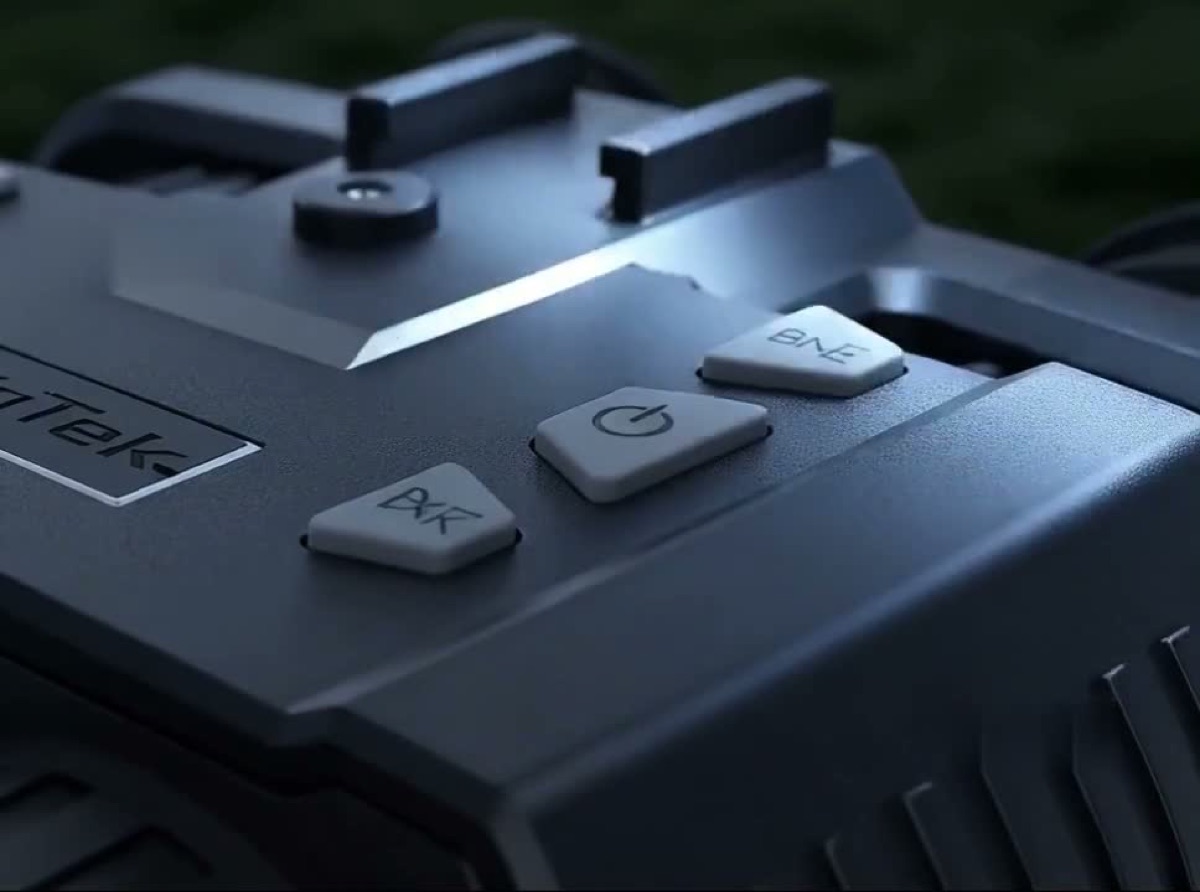
The three settings that decide the picture
Most of the complaints we handle aren't hardware faults. They're one of these three settings.
IR power. We run level 2 or 3 at 25 feet, level 5 to 6 past 50 feet. Crank it to max at close range and the seed tray goes white and the bird disappears into the bloom. If the frame looks foggy and flat, that's usually too much IR bouncing back, not a broken sensor.
Focus, then diopter. Set the diopter for your eye first, then focus on the feeder with the IR on. Our handheld units hold focus from about 3 feet to infinity, but if you move the tripod 10 feet closer you will have to refocus — the depth of field at 7x is shallow. We wrote a full walkthrough in how to focus night vision binoculars, and it's worth ten minutes before your first session.
Screen brightness. Drop it to the lowest level you can still read. The 3-inch LCD is the brightest thing in your yard at that point, and every bit of light it throws back at your eye costs you dark adaptation. On our units the difference between brightness 5 and brightness 1 is about 15 minutes of re-adapting after you look away.
Binocular, monocular, or the bigger battery
We sell all three shapes and they're not interchangeable for this job.
Our handheld 4K night vision binoculars (NV-LG67) are the ones that live on the tripod by the feeder. Two-eye viewing for 45 minutes is much less tiring than squinting through one eyepiece, the 4K sensor gives you a cleaner still frame to review later, and the 3-inch screen is readable without hunching. The trade-off is weight — right around a pound and a half, which is fine on a tripod and annoying handheld.
The handheld night vision monocular (NV-LG64) is what we grab when we're walking the yard instead of sitting. Same 7x IR, 1080p instead of 4K, and light enough to hold one-handed for a few minutes. One eye gets tired faster, and handheld at 7x you'll see every heartbeat in the image.
The 5000mAh night vision binoculars (NV-DT59) are the all-night option. The bigger cell runs well past the two-hour mark with IR on, which matters if you're watching a raccoon route or a nest area from 9 pm to midnight. Heavier again, and overkill for a 40-minute dusk session.
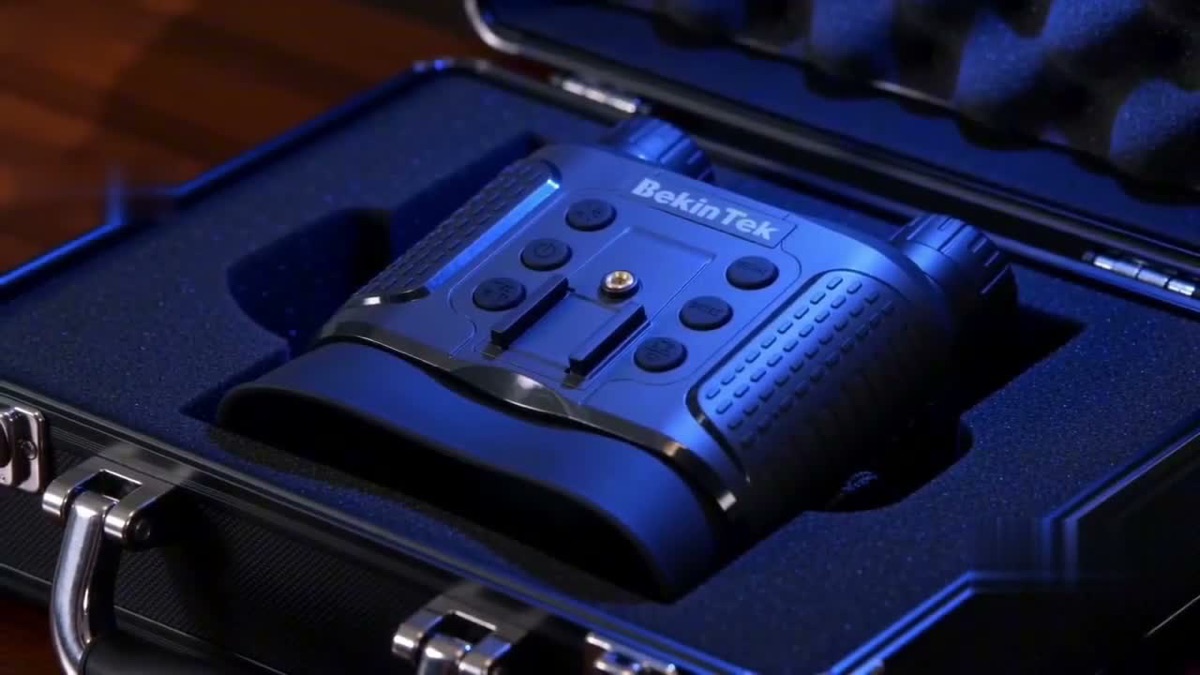
Setting up at the feeder
Distance beats zoom. Put the unit 20 to 30 feet from the tray, at roughly feeder height, and angle it so the beam crosses the tray rather than hitting the back of it. If you're shooting past a window, don't — the glass sends IR straight back into the lens and you get a white haze with a bird-shaped hole in it.
A $20 tripod with a 1/4-inch screw is the single best accessory. Our units all have the thread on the bridge. Once the unit is locked down you can leave it running, sit back, and watch instead of chasing focus.
Keep a spare cell or a power bank in your pocket when it's below 40°F. Lithium cells lose capacity fast in the cold, and a unit that ran three hours in October may quit at 70 minutes in January. We tested that separately in our cold-weather battery write-up.
Where this gear stops
Two limits worth knowing before you buy.
You get no color and no heat signature. Feather pattern identification is out; you're working with shape, size, posture and behavior, which is enough for common feeder birds and not enough for a rare warbler. And motion smears — a bird landing hard or flapping through the frame leaves a streak, so you'll be watching still moments, not action.
Wet weather also costs you. Mist and light rain scatter IR back into the lens, and the fix is to lower the IR power and get closer, not to raise it. We covered that in can digital night vision see through fog.
FAQ
Can night vision help me identify birds after dark? For common feeder birds, yes — by silhouette, size and behavior. You won't get plumage detail, so it's a confirmation tool for birds you already know, not a way to identify a lifer at midnight.
Will the IR light scare birds away? Ours didn't spook chickadees, cardinals or doves when the illuminator was left on a low, steady setting. A neighborhood cat noticed within a minute. Start low, keep the beam still, and sit slightly off the feeder axis.
How close can I set up? Our handhelds focus down to about 3 feet, but that's not the useful limit. Closer than 15 feet the IR bloom washes out detail, so 20 to 30 feet is the sweet spot.
Do I need a tripod? For a fixed feeder, yes. Handheld at 7x, a 45-minute session turns into a shaky mess and you'll spend it refocusing. Any cheap tripod with a standard 1/4-inch screw works.
Can I watch through a window from inside? No. Window glass reflects the IR straight back and you get haze. If you want to stay inside, put the unit outside on a tripod and use the video output, or use a wired remote.